
More on the Mortgage Crisis
September 26, 2010 The following is my answer to a friend’s question about “what happened”, triggered the “this should have been a red flag” element of this article on the Huffington Post.
A confluence of events conspired to make this one worse than others (notice my restraint from calling this a “perfect storm”?). What now appear to have been unnecessarily low interest rates by the Fed after the terror attacks meant investors were more hungry than usual for yield and sought investments that carried a higher return for what was perceived as equivalent risk. Even though the return was higher on mortgage-backed bonds, the yield wasn’t nearly high enough for investors (insurance companies, pension funds, mutual funds, etc.) to do due diligence on thousands of mortgages buried within AAA-rated securities.
It was a risk/reward calculation for investors. The investors were working with their coverage teams at I-Banks (a process called “reverse inquiry”). The I-Banks worked to create securities that met the return and risk criteria set out by the investors–because that’s what they do, they sell bonds and get (well) paid to do so. They, in turn, need product to package so they first buy as much of it as they can from third parties, then, over time, buy their own mortgage companies to originate as many mortgages as possible (a pure vertical integration strategy–capturing the means of production). Borrowers had low interest rates and plenty of mortgage money to be had were willing participants. Lenders, having a ready source of cash (the sale of the loans to I-Banks and investors), and eager borrowers, used other people’s money to churn volume. And this is just the “cash market”, which says nothing about the “synthetic market” in which a short side of the trade was required before anything could even get started (see Magnatar, Goldman, etc.)
Everyone was looking for something and managed to get it, largely by looking the other way and willfully suspending their disbelief. As is common in these cycles, people who are long the asset always think that they’ll be smart enough to get out before it crashes. But only some do because once you hop on the profit escalator, it’s tough to jump off when others continue to make what look like profits. Once everyone is on one side of the ship, it’s gonna tip over. As people realize that it’s tipping to the starboard side, they start, slowly at first and then en masse to race to the port side, which causes the ship to tip over in THAT direction instead. It’s the herd mentality that people have written about for hundreds of years. (One of th best efforts on this topic is Mackray’s “Extraordinary Popular Delusions and the Madness of Crowds” written in the mid-1800s). In short, it was ever thus.
I did about a 45 minutes blow-by-blow presentation on this to some grad students a while back. If I can figure out how to post the PowerPoint slides the germane pieces of it (perhaps a video blog post?).
Having never been a fan of the repeal of Glass-Steagall, I honestly don’t think that it’s repeal was much of a factor in this. Remember that G-S separated commercial from investment banking. Lehman and Bear and Goldman and Morgan Stanley weren’t commercial banks, so everything they did would have still been done (at 33x leverage). That said, Citi and BofA were underwriters of bonds and also commercial banks that failed so keeping the wall up arguably would have helped them. But there’s also the case of the Royal Bank of Scotland–the biggest bank failure of all time. It wasn’t their underwriting of bonds that got them in trouble, but what they bought that got them into trouble. There was an element of this in the failure of BofA and Citi, too, so it’s hard to say.
It’s true, there will be a “next time”. The troubling thing is the observation that the boom/bust cycles are coming both closer together and becoming more violent. Until meaningful regulations are put (back) into place (and the recently passed regs don’t strike me as such), and investors, underwriters and issuers get serious about risk management we’re likely in for it again. Never underestimate the imagination and power of people whose interest is in figuring out how to do thinks not prohibited by regulations. The securitization business has had its epitaph written several times in the last twelve years (think Enron and off-balance sheet issues), only to find new life thanks to creative lawyers, accountants and bankers.
 Leave a Comment » |
  Uncategorized | Tagged: bank of america, bear stearns, bofa, citi, citibank, enron, Federal reserve, glass-steagall, goldman sachs, huffington post, lehman, magnatar, merrill lynch, morgan stanley, mortgage crisis, mortgage defaults, off-balance sheet, rating agencies, securitization |
  Permalink
 Posted by Mark Wegener
The Best Playlist Nobody Heard
September 19, 2010Put it on SHUFFLE, and let ‘er go. Five hours of memorable music.
I Say A Little Prayer Aretha Franklin
Every Day I Have the Blues B.B. King
Rag Mama Rag (edited) The Band
The Shape I’m In The Band
Don’t Do It (edited) The Band
Do It Again The Beach Boys
For You Blue The Beatles
I Feel Fine The Beatles
I Want To Tell You The Beatles
Old Brown Shoe The Beatles
Girl Beck
Silvio Bob Dylan
Dignity (unplugged) Bob Dylan
Something to Talk About Bonnie Raitt
Summer of ’69 (unplugged) Bryan Adams
Mr. Soul Buffalo Springfield
Last Name Carrie Underwood
Another Saturday Night Cat Stevens
I Feel for You Chaka Khan
One Fine Day Chiffons
Fill Me With Your Light Clem Snide
Speed Of Sound Coldplay
I Can’t Stand The Rain The Commitments
Treat Her Like A Lady Cornelius Brothers & Sister Rose
Teen Angst Cracker
Linger The Cranberries
Girls Talk Dave Edmonds
I Will Possess Your Heart Death Cab for Cutie
Little Bribes Death Cab for Cutie
Two More Bottles of Wine Delbert McClinton
Peace Frog Doors
Iko Iko Dr. John
Hard Sun Eddie Vedder
Ball & Chain Elton John
Monkey to Man Elvis Costello & The Imposters
A Little Less Conversation Elvis Presley
I Don’t Wanna Talk About It Now Emmylou Harris
Tears of a Clown The English Beat
Would I Lie To You Eurythmics
Shame Evelyn “Champagne” King
I’m Walkin’ Fats Domino
Blueberry Hill Fats Domino
Bright Future In Sales Fountains Of Wayne
The Race Is On George Jones First Time Live!
Keep Your Hands to Yourself The Georgia Satellites
Head Over Heels Go-Go’s
Airstream Driver Gomez
Bad Chardonnay Graham Parker
The Golden Road Grateful Dead
Samson and Delilah Grateful Dead
Star Baby Guess Who
Careful Guster
Family Tradition Hank Williams, Jr.
Sit Down James The Best of James
Come a Little Bit Closer Jay And The Americans
Come Monday Jimmy Buffett
You Can Leave Your Hat On Joe Cocker
The Jet Set Joe Jackson
Nobody Told Me John Lennon
Pink Houses John Mellencamp
Free Man in Paris Joni Mitchell
Big Yellow Taxi Joni Mitchell
Happy (live) Keith Richard, Sheryl Crowe, Chrissie Hynde & Guests
This Is for Everyone Klee
My Hero, Zero Lemonheads
Dixie Chicken Little Feat
Lagrimas Solitarias Los Straitjackets
This Is Us Mark Knopfler/Emmylou Harris
Nowhere to Run Martha Reeves & The Vandellas
That’s the Way Love Is Marvin Gaye
Can I Get a Witness Marvin Gaye
Pleasant Valley Sunday Monkees
Unknown Legend Neil Young
Kodachrome Paul Simon
My Baby Gives It Away Pete Townshend & Ronnie Lane
Bike (edited) Pink Floyd
Arnold Layne Pink Floyd
Hallelujah, I Love Her So Ray Charles
You Are My Sunshine Ray Charles
Re-make/Re-model Roxy Music
Mean Woman Blues Roy Orbison
Tightrope Stevie Ray Vaughan
Gloria Van Morrison w/John Lee Hooker
A Certain Girl Warren Zevon
Leave a Comment » | Uncategorized | Tagged: Aretha Franklin, B.B. King, Beck, Bob Dylan, Bonnie Raitt, Bryan Adams, Buffalo Springfield, carrie underwood, Cat Stevens, Chaka Khan, Chiffons, Chrissie Hynde, Clem Snide, Coldplay, Cornelius Brothers & Sister Rose, Cracker, Dave Edmonds, Death Cab for Cutie, Delbert McClinton, Dr. John, Eddie Vedder, Elton John, Elvis Costello, Elvis Presley, Emmylou Harris, English Beat, Eurthmics, Evelyn "Champagne" King, Fats Domino, Fountains Of Wayne, George Jones, Gomez, Graham Parker, Guster, Hank Williams Jr., James, Jay And The Americans, Jimmy Buffett, Joe Cocker, Joe Jackson, John Lee Hooker, John Lennon, John Mellencamp, Joni Mitchell, Keith Richard, Klee, Lemonheads, Little Feat, Los Straitjackets, Mark Knopfler, Martha Reeves & The Vandellas, Marvin Gaye, Neil Young, Paul Simon, Pete Townshend, Pink Floyd, Ray Charles, Ronnie Lane, Roxy Music, Roy Orbison, Sheryl Crowe, Stevie Ray Vaughan, The Band, The Beach Boys, The Beatles, The Commitments, The Cranberries, The Doors, The Georgia Satellites, The Go-Go's, The Grateful Dead, The Guess Who, The Monkees, Van Morrison, Warren Zevon | Permalink
Posted by Mark Wegener
Two things to remember about nicknames
September 17, 2010This is a true story.
I played in a member-guest golf event with a life-long friend this week. Along the way, we met Chuck from Omaha.
It seems that Chuck belongs to a club in Nebraska has something of a tradition of assigning nicknames to its members. Just about everyone has a nickname. Chuck did not. And this is where Chuck made his first mistake. He asked for a nickname.
Nickname Rule #1: You cannot ask for a nickname. If you do, you will regret it.
Chuck’s “friends” at the club obliged him, of course. And “Shithead” was born.
Yes, they named him Shithead. Ha, ha, ha. That’s funny. Everyone laughed and enjoyed the moment. Then Chuck made his second error which not only compounded the first one but essentially finished him for good. He objected.
He said he didn’t like his new nickname that he asked for. Ouch. Bad move, Chuck Shithead. Bad, bad move.
Nickname Rule #2: Never let your feelings about your nickname be known to others. If you say you like it, they’ll stop using it. If you say you hate it, they’ll never let you forget it.
And now, Chuck is known as Chuck to his mother and his wife. Everyone else calls him “Shithead”, from his best friends, including the member that invited him) and to his ex-wife (obviously). He even answers to Shithead, and with a smile on his face to boot.
The implications of this boggle the mind. Think of the poor Grandkids.
“Let’s go visit Grandpa Shithead at the nursing home.”
“What did you bring me, Grandpa Shithead?”
Teacher: Timmy, where’d you go for Christmas?
Grandkid: “We went to visit my Grandpa Shithead.”
Teacher: Hey kid, who you calling “shithead”?
All because he got what he asked for.
Leave a Comment » | Uncategorized | Permalink
Posted by Mark Wegener
For David Giaimo
August 12, 2010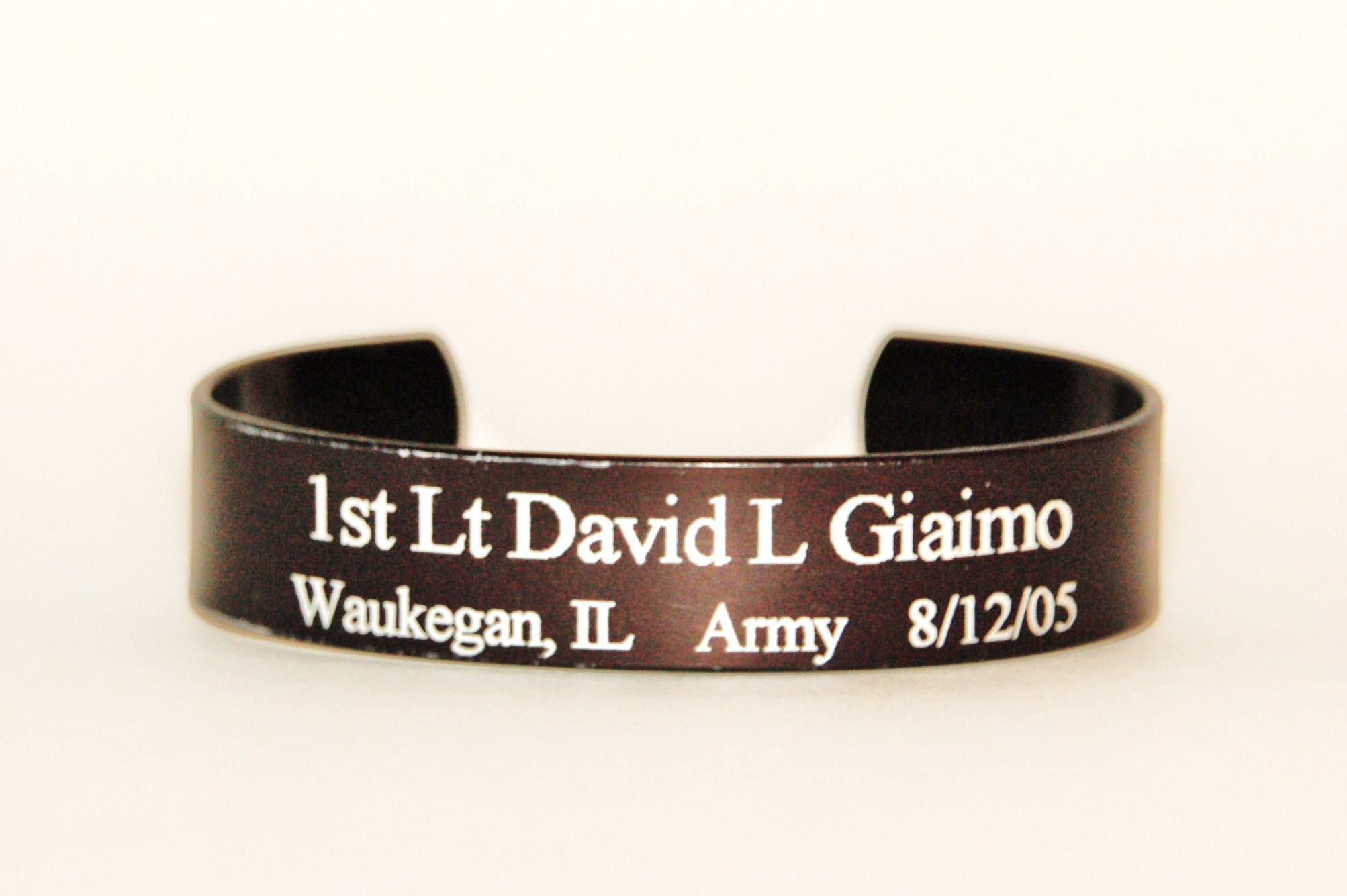 I didn’t know David Giaimo, but he entered my life at some point in 2008.
The wars in Iraq and Afghanistan were raging. The evening newscasts all ended with lists of the dead. There they were, in silence and black and white. Page after page of the week’s tally of teenagers and twentysomethings, with the occasional 32-year old master sergeant.
I couldn’t stop thinking about the lists, the names, their ages. I know 19-year olds. My now 20-year old daughter knows kids in the service. Although my cousins had served in the Army and Navy, this felt different to me. We were kids then, without kids of our own, without the perspective that age brings. This was a live fire environment. Every night there was another list, age 19, age 22, age 24. Over and over.
…
I was too young to really understand Vietnam when it was happening. I remember watching Huntley and Brinkley and seeing the jungle battles, the Huey helicopters, the stretchers, the protests, the draft card burning and the POWs and the POW bracelets. My sister had one. It haunted me. That was a guy in a jungle prison. It was a lot for a 9-year old to process.
I don’t remember where I first saw the Hero Bracelet, but I think it was in watching news from the last presidential campaign. Both Senators McCain and Obama had them. I think one of the candidates, perhaps both, received the one he wore from the mother of a fallen soldier along the campaign trail.
I ordered one, and with it I met First Lieutenant David Giaimo from Waukegan, Illinois. A randomly-selected* name out of several thousand men and women from the Iraq and Afghanistan wars. I looked him up. There was only a thimble full of information available about him. Two-time state champion marksman, varsity baseball player, good friend, loving son, Army volunteer. He died when his Humvee hit an IED in Tikrit, Iraq on August 12, 2005. He was 24.
Volunteer.
He walked into the fire.
I wore the bracelet often and got many questions about it. I know at least a few of the people who asked thought it was a silly gesture. I know my telling what I knew of David’s story made some people uncomfortable, for keeping the war and the death as far out of their lives as possible was their primary goal. Not in front of the children. I was proud to spread the gospel of David’s service and what those like him did to others. We must not forget what they had done and are doing on our behalf.
I wore the bracelet for quite a while, and then put it away. The end of 2008 marked a change in my life—a beginning of what turned out to be sixteen months of unemployment —so wearing it while trying to get a job seemed somehow imprudent. I wasn’t embarrassed by it, but first things first. I didn’t want to give anyone an(other) excuse to not hire me, for I give plenty of those on my own. Here I was, an unemployed banker with 25 years behind him in the worst financial and economic crisis the country had faced in 70 years, searching for meaning and a way to feed and educate three kids.
Though at times daunting, my wife and I were constantly aware that what we were living through seemed small relative what others were facing: the struggles of a little girl with inoperable brain cancer with not much time left and a twin sister and family trying to deal with it; the impending loss of a home; people carrying burdens of unfathomable weight; David, his family and families like his. There was plenty of suffering to go around. I was just out of a job.
…
I’ve been working now for about four months. It’s not as good as it could be, but it’s better than staying home. A couple of weeks ago, I happened by the television as Jim Lehrer was saying, “…and now, in silence, the names of the dead as released by the Pentagon.” There it was again. Another list. Age 19. Age 22. Age 24. Even though I hadn’t been watching, the lists had never stopped.
The memory of David and his sacrifice returned to me. It shook me that I had pushed his memory aside, for I never meant for that to happen. I haven’t stopped thinking about him since.
Volunteer.
He ran into the fire.
Lincoln said it best, “It is…for us to be here dedicated to the great task remaining before us—that from these honored dead we take increased devotion to that cause for which they gave the last full measure of devotion—that we here highly resolve that these dead shall not have died in vain.”
The loss of David and all like him is only in vain if we forget. On this the fifth anniversary of that fateful day, I remember. However clumsy this is, it is my tribute to him. I am grateful for his service. I’m sorry for his loss.
* A review of the website doesn’t show the ability to get a random bracelet for a soldier. Since I bought mine, they’ve put a searchable database of the fallen from Iraq and Afghanistan, so you can pick an individual.
8 Comments | Uncategorized | Tagged: abraham lincoln, afghanistan, army, gettysburg address, hero bracelets, iraq war, mccain, Navy, obama, unemployed, waukegan Illinois | Permalink
Posted by Mark Wegener
Ground Zero Vogue?
August 9, 2010Where’s the outrage? Newt? Sarah? Glenn? Anyone?
Conde Nast, publisher of Golf Digest, Vanity Fair and Vogue, recently announced a deal to be the anchor tenant in one of the buildings in the old World Trade Center complex. This is not “near” Ground Zero like the proposed mosque and community center that has caused such a dust up. It’s right on the property.
So Anna Wintour and Graydon Carter get office on Ground Zero but there’s no room a couple blocks away for a religious center?
Is it hallowed ground or isn’t it?
Is it a free country or isn’t it?
How far away from Ground Zero do opponents of the Park51 complex think is “respectful distance”? Kansas? Hawaii?
And I presume that I can count on the opponents to be equally outraged if (when?) the Christian Identity movement that counted Tim McVeigh as a member wants to hold a meeting in Oklahoma City.
If he’s not, the terrorists have surely won.
Leave a Comment » | Uncategorized | Tagged: Anna Wintour, christian identity, Conde Nast, Golf Digest, Graydon Carter, Ground Zero, michael bloomberg, mosque, Park51, tim mcveigh, Vanity Fair, World Trade Center | Permalink
Posted by Mark Wegener
Shakespeare on Palin
July 21, 2010Excerpted from Hamlet Act IV, scene v.
her speech is nothing,
Yet the unshaped use of it doth move
The hearers to collection; they aim at it,
And botch the words up fit to their own thoughts;
Which, as her winks, and nods, and gestures yield them,
Indeed would make one think there might be thought,
Though nothing sure, yet much unhappily.
Leave a Comment » | Uncategorized | Tagged: hamlet, sarah palin, Shakespeare | Permalink
Posted by Mark Wegener
Religiously Speaking
July 17, 2010Without wanting to, I’ve spent more than a little time today thinking about religion. I’m out-of-town for my nephew’s engagement party. He’s marrying a lovely Baptist girl. My (non-Baptist) sister and my (non-Baptist) parents have made much of the fact that the wedding reception will be alcohol free. There were questions about whether the engagement party should be similarly free of merriment alcohol.
Here’s what I wanted to know: If my Jewish friends can somehow tolerate without comment my having a ham sandwich in their presence, why can’t I have a beer on a 90+ degree St. Louis day in the presence of my new Baptist friends? My guess is that the answer probably has as much to do with my family’s hangups (not surprisingly) as any intolerance on the Baptists’ part.
After that discussion, I began reading the NYTimes’ coverage of the Vatican’s new pronouncements on the pedophilia scandal. As I read the articles, the priests have essentially said that while pedophilia is bad, ordaining women would be worse.
At a news conference at the Vatican, Msgr. Charles J. Scicluna, the Vatican’s internal prosecutor in charge of handling sexual abuse cases, explained the change on women’s ordination in technical terms. “Sexual abuse and pornography are more grave delicts, they are an egregious violation of moral law,” Monsignor Scicluna said in his first public appearance since the sex abuse crisis hit. “Attempted ordination of women is grave, but on another level, it is a wound that is an attempt against the Catholic faith on the sacramental orders.”
The pedophilia scandal–on-going for decades if not centuries–is a blip or some annoyance to be dispensed with. Whereas the ordination of women would so fundamentally rock the Boys Club that it couldn’t be considered. And people think the members at Augusta National have issues.
I understand that the priests think that having women join their ranks would undeniably change the church. But isn’t that the point?
Leave a Comment » | Uncategorized | Tagged: baptists, catholics, nytimes, pedophilia, priests, st. louis, Vatican, women priests | Permalink
Posted by Mark Wegener
On Jury Duty
July 5, 2010
Suck it up and get in there.
Mention that you’ve been called for jury duty and you’re guaranteed to hear a litany of sure-fire methods of getting out of it. Most, if not all of them, I find embarrassing and I can’t believe that anyone would want to say any of those things about themselves in a public forum and on the record, because the common theme in the advice is “I’m not capable of being fair.”
I’ve lived in the Chicago area for 20 years and have just been called for the first time. The desire to avoid jury duty seems almost universal. Tragic events in our extended family have left my father with the metaphysical certitude that the criminal justice system doesn’t work. His lack of faith in the system, and his willingness to tell anyone within earshot of it makes him certain that he has blanket immunity from jury service for the rest of his days. The details of that story are too sad to recount here. I understand why he thinks that way, but I’ve reached a different conclusion based on the same facts. It won’t surprise anyone that knows my father and me that we would come out on different sides.
I have had my own modest encounter with the criminal justice system–a complicated tale for another time (I can’t believe I haven’t set it down on paper yet, five years after it happened. Perhaps soon.) It was from that experience that I developed a different view of jury service. I’d urge the two people who read this column to consider it and perhaps pass it on.
There are two fairly simple reasons why being called to jury duty not only doesn’t bother me but it is something I welcome.
First, I’ll never be asked to put on the uniform on to defend this country. Voting and serving on a jury are among the only things I can do in service of this nation. Spending one day or one month on a jury is a small sacrifice to make compared to the people who put on that uniform in service of our country, let alone those that gave their lives for our cause. I have friends and cousins on both sides of my family that have served honorably, not to mention those in earlier generations who were drafted. On a personal level, my dodging jury duty because it’s a little inconvenient for me to spend a day at the courthouse cheapens the sacrifice they’ve made.
Secondly, if I were, heaven forbid, sitting at the defense table, I’d want someone like you or me sitting in the jury box. All those people running from jury service are forcing defendants to place their liberty in the hands of, as the joke goes, “people not smart enough to get out of jury duty.” That would not comfort me if I were a defendant.
I know that people with my background (multiple degrees, white-collar job, to say nothing of my appearance) are routinely dropped from juries during the voir dire process. Not being selected strikes me as different from having a potential juror saying something deliberately make them unattractive for jury service.
I know it’s a pain and I know that it costs you a day’s work that you’ll have to figure out how to make up. I know it’s boring just sitting there with your fellow-man, being denied access to anything but a newspaper or a book.
Tough.
Lots of people have given much of themselves to give us this system. Someone you know or love could need a bunch of smart people in that jury box one day. Say thanks to those that have worn the uniform by not complaining about it. Do your friends, loved ones and fellow citizens a favor. Suck it up and get in there.
Leave a Comment » | Uncategorized | Permalink
Posted by Mark Wegener
A New Memorial Day
June 14, 2010I should start by saying that this is not my idea, but I think it’s a good one. Someone mentioned it to me. It may have even been a friend of mine. If that person wants to identify himself and claim credit, I’m glad to give it, because I honestly have no friggin’ idea where I heard this. The idea has so much merit in my eyes that I’ll share it in the hopes that a massive groundswell will result and we’ll get it done.
The summer is generally defined as the period between Memorial Day and Labor Day. The idea doesn’t change that, it just reverses it.
The premise is that Memorial Day should really be the second Monday in September–the one closest to September 11th. Labor Day would be moved to the last Monday in May. The Indianapolis 500 won’t care.
When you consider the 3,000 civilians that died on September 11, 2001, and add to it the approximately 7,000 American soldiers that have died in Iraq and Afghanistan and the estimated 35,000 wounded from those conflicts and you have something worth noting. Those honored by the existing Memorial Day holiday will still be duly noted and honored.
The presence of Labor Day so near this honored day is really what’s at issue. I don’t care about honoring the place of the Labor movement in American history. I just think that given what’s happened and its long-term aftermath, having Labor honored in May and service men and women honored in September near September 11th each year makes more sense.
So let the summer be defined as the time between Labor Day and Memorial Day, instead of the other way around.
Labor Day on the last Monday in May. Memorial Day on the second Monday in September.
We’ll all be better off for it.
Leave a Comment » | Uncategorized | Tagged: afghanistan, indianapolis 500, iraq war, labor day, memorial day, national holiday, september 11 | Permalink
Posted by Mark Wegener

 The Local Paper