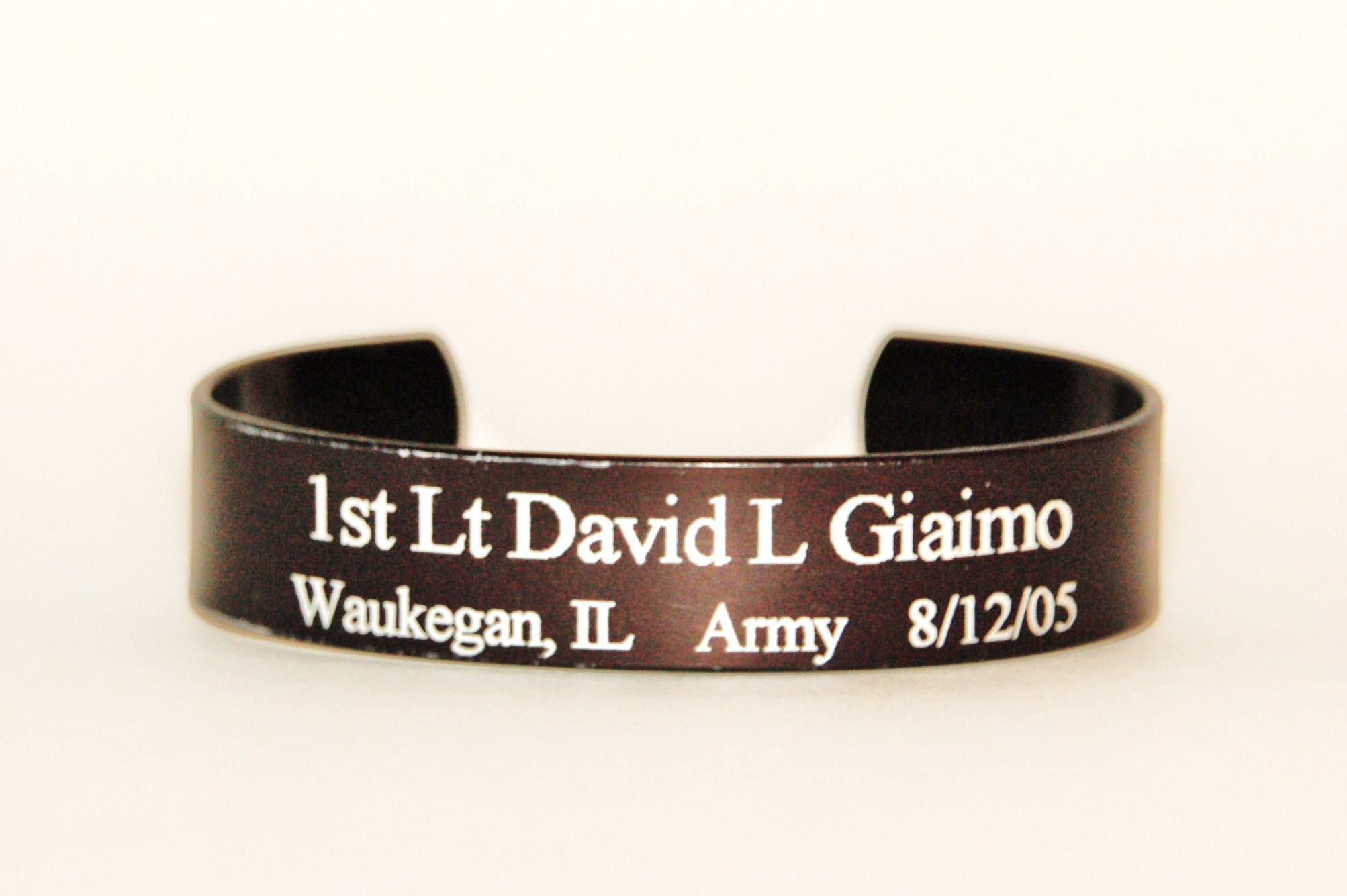
 I didn’t know David Giaimo, but he entered my life at some point in 2008.
The wars in Iraq and Afghanistan were raging. The evening newscasts all ended with lists of the dead. There they were, in silence and black and white. Page after page of the week’s tally of teenagers and twentysomethings, with the occasional 32-year old master sergeant.
I couldn’t stop thinking about the lists, the names, their ages. I know 19-year olds. My now 20-year old daughter knows kids in the service. Although my cousins had served in the Army and Navy, this felt different to me. We were kids then, without kids of our own, without the perspective that age brings. This was a live fire environment. Every night there was another list, age 19, age 22, age 24. Over and over.
…
I was too young to really understand Vietnam when it was happening. I remember watching Huntley and Brinkley and seeing the jungle battles, the Huey helicopters, the stretchers, the protests, the draft card burning and the POWs and the POW bracelets. My sister had one. It haunted me. That was a guy in a jungle prison. It was a lot for a 9-year old to process.
I don’t remember where I first saw the Hero Bracelet, but I think it was in watching news from the last presidential campaign. Both Senators McCain and Obama had them. I think one of the candidates, perhaps both, received the one he wore from the mother of a fallen soldier along the campaign trail.
I ordered one, and with it I met First Lieutenant David Giaimo from Waukegan, Illinois. A randomly-selected* name out of several thousand men and women from the Iraq and Afghanistan wars. I looked him up. There was only a thimble full of information available about him. Two-time state champion marksman, varsity baseball player, good friend, loving son, Army volunteer. He died when his Humvee hit an IED in Tikrit, Iraq on August 12, 2005. He was 24.
Volunteer.
He walked into the fire.
I wore the bracelet often and got many questions about it. I know at least a few of the people who asked thought it was a silly gesture. I know my telling what I knew of David’s story made some people uncomfortable, for keeping the war and the death as far out of their lives as possible was their primary goal. Not in front of the children. I was proud to spread the gospel of David’s service and what those like him did to others. We must not forget what they had done and are doing on our behalf.
I wore the bracelet for quite a while, and then put it away. The end of 2008 marked a change in my life—a beginning of what turned out to be sixteen months of unemployment —so wearing it while trying to get a job seemed somehow imprudent. I wasn’t embarrassed by it, but first things first. I didn’t want to give anyone an(other) excuse to not hire me, for I give plenty of those on my own. Here I was, an unemployed banker with 25 years behind him in the worst financial and economic crisis the country had faced in 70 years, searching for meaning and a way to feed and educate three kids.
Though at times daunting, my wife and I were constantly aware that what we were living through seemed small relative what others were facing: the struggles of a little girl with inoperable brain cancer with not much time left and a twin sister and family trying to deal with it; the impending loss of a home; people carrying burdens of unfathomable weight; David, his family and families like his. There was plenty of suffering to go around. I was just out of a job.
…
I’ve been working now for about four months. It’s not as good as it could be, but it’s better than staying home. A couple of weeks ago, I happened by the television as Jim Lehrer was saying, “…and now, in silence, the names of the dead as released by the Pentagon.” There it was again. Another list. Age 19. Age 22. Age 24. Even though I hadn’t been watching, the lists had never stopped.
The memory of David and his sacrifice returned to me. It shook me that I had pushed his memory aside, for I never meant for that to happen. I haven’t stopped thinking about him since.
Volunteer.
He ran into the fire.
Lincoln said it best, “It is…for us to be here dedicated to the great task remaining before us—that from these honored dead we take increased devotion to that cause for which they gave the last full measure of devotion—that we here highly resolve that these dead shall not have died in vain.”
The loss of David and all like him is only in vain if we forget. On this the fifth anniversary of that fateful day, I remember. However clumsy this is, it is my tribute to him. I am grateful for his service. I’m sorry for his loss.
* A review of the website doesn’t show the ability to get a random bracelet for a soldier. Since I bought mine, they’ve put a searchable database of the fallen from Iraq and Afghanistan, so you can pick an individual.


 Posted by Mark Wegener
 The Local Paper